


If you have searched for the FPMomTips parental guide and ended up more confused than when you started, you are not alone. The name shows up on a dozen different websites, sometimes as FPMomTips, sometimes as FPMomHacks, sometimes attached to names and claims that do not quite check out. This article sorts it out. It explains what the guide is, where the real version lives, which of its ideas genuinely help in everyday family life, and, just as importantly, what it leaves out, so you can fill those gaps yourself.
One honest note up front: Medium Blogs is not affiliated with FamousParenting.com. This is an independent explainer written for parents who want practical help, not a sales page. Where the ranking pages disagree or make claims nobody can verify, we say so.
What Is the FPMomTips Parental Guide by FamousParenting?
FamousParenting is a parenting-advice website at famousparenting.com. It publishes practical, mom-focused content about routines, behaviour, emotional development, screen time, and family life. FPMomTips is its branded parental-guide series: a collection of strategies presented as one guide, built around a few core principles, age-by-age advice, and checklists.
In plain terms, the guide is a set of free articles on that site, not a book you buy or a course you enroll in. Some third-party pages talk about eBook, print, or audio versions, but there is no solid public evidence for those, so treat such claims with caution. The useful core is simple and free: build steady routines, stay consistent, communicate clearly, and model the calm behaviour you want to see.
How the FPMomTips Parental Guide by FamousParenting Is Organized
The official guide rests on five principles: safety first, consistency, simple routines, clear communication, and calm modeling. Around those, it walks through the stages of childhood. Newborn care covers safe sleep, feeding schedules, hunger signs, diaper and skin care, what to do about a fever, and a bedtime routine. The toddler section leans on day-blocks and play-based learning. For challenging behaviour it recommends gentle boundaries with calm limits and immediate praise. School-age chapters deal with homework, screen time, and social skills. Finally, it turns to the parents themselves: one self-care habit a week, a few shared co-parenting rules, a chore rota, and a family-meeting script.
That structure is genuinely helpful. The weakness is depth. Most sections are a paragraph of general advice where a tired parent at 7 a.m. needs a script, a checklist, or a fallback plan. That is where this article comes in: we keep the sound principles, and we add the specifics the original leaves out.
Printable Tools: Checklists, Routine Charts, and the Emergency Contacts Sheet
One concrete gap is now closed: the official guide advertises four printable tools parents can actually use. There is a newborn safety checklist, a toddler routine chart, a school-age assignments plan, and a one-page emergency contacts sheet you fill out yourself. This article mentions checklists in passing, but these four named tools are what a parent should look for on the official guide page, and they answer the common search for FPMomTips printable checklists and routine charts directly. Print them, put them where everyone can see them, and the systems in this article get much easier to keep.
FPMomTips vs FPMomHacks vs FamParentLife: Clearing Up the Confusing Names
Part of the confusion is that FamousParenting uses several overlapping labels, and copycat sites mix them further.
- FPMomTips is the parental guide itself: principles plus age-by-age strategies.
- FPMomHacks is the spin-off label for quick, time-saving tricks: night-before prep, checklists, meal shortcuts, and morning systems. Think of it as the “how” to FPMomTips’ “why.”
- FamParentLife and FPLearning are labels and keyword phrases seen across the FamousParenting cluster for general family life and children’s learning content, rather than confirmed official sections of the site.
They are related, but they are not the same thing, and pages that use them interchangeably only add to the muddle. When you search, check which label the page is actually about before following its advice.
The Two Different Expansions You’ll See
You will also see two different explanations of what FPMomTips stands for. The site’s own older guide expands it as “Family Planning and Mom Tips.” A third-party page expands it as “Famous Parenting Mom Tips.” The official site uses the term loosely rather than as a strict acronym, so neither expansion is worth arguing over. What matters is the content behind the name, not the letters.
Watch Out for Lookalike Domains
This is the part that matters most for your safety. The real site is famousparenting.com. Around it sits a constellation of similar-looking domains publishing near-identical keyword-targeted pages, including one with a doubled letter at the start of the name. Some of these pages are harmless summaries. Others are thin content farms. One independent explainer notes that the official contact page lists no public phone number, which means any phone number you find on a third-party site claiming to be FamousParenting should not be trusted. That is why ‘famousparenting phone number’ is itself a searched topic, served mostly by third-party aggregators rather than by the official site. If a page asks you to call a number or pay for the “full guide,” close it. The real guide is free articles on the official site.
Is There a FamousParenting App?
Short answer: not verifiably. The official 2026 guide page ends by inviting parents to download an app for timed reminders and quick tips, but it gives no app name, no store listing, and no download link, and no such listing surfaced in search. So if you searched for a FamousParenting app download, treat every third-party download page claiming to be that app as unverified, and do not install anything from it. Until the official site names an app and links an official store page, the honest answer is that no FamousParenting app has been verified to exist.
Is FamousParenting Legit? An Honest Answer
Yes, FamousParenting is a real parenting-advice website, and FPMomTips is its real guide series. But “real” does not mean “expert-reviewed.” None of the top-ranking pages for this keyword carry a credentialed author, an expert review, or cited studies. A few make bold claims with no source at all. One page, for example, claims routines cut behaviour problems by a large percentage without linking to any study. Treat numbers like that as marketing, not evidence. The trust picture is no better on authorship: the official site’s parenting advice archive shows bylines with no credentials anywhere, which reinforces that no credentialed author or expert review was found behind this guide.
A stronger way to judge any parenting advice, including this guide, is to check it against frameworks from the American Academy of Pediatrics (AAP), the Centers for Disease Control and Prevention (CDC), and the World Health Organization’s nurturing-care framework. Where FPMomTips agrees with those, steady routines, responsive caregiving, reading and talking with your child daily, limits on screens for young children, it stands on solid ground. Where it goes beyond them into guarantees (“results in two weeks”), take it with a pinch of salt. Good parenting advice rarely comes with a deadline.
You may also see the name Chelsea Acton attached to the site, and searches asking whether Chelsea Acton is real or fake keep circulating for a reason. Third-party biographies contradict each other on birthplace (Portland, Oregon versus California), on education (a Stanford child psychology degree versus child psychology certifications), and on book titles (Parenting with Heart, The Balanced Parent, Raising Emotionally Intelligent Children, and several others all appear on different pages). The site’s own 2026 profile claims she started as a classroom teacher, posted short videos, published a free guide that drove newsletter sign-ups, and launched a paid course with scholarships. That is the site’s own claim, not independent verification. Do not adopt any birth date, degree, or book title about her as fact, and treat personality-based claims the same way: interesting, but not evidence.
The Core Principles That Actually Hold Up
Strip away the branding and the guide rests on ideas that child-development research genuinely supports. Here is how they work in practice, without the fluff.
Connection Before Correction
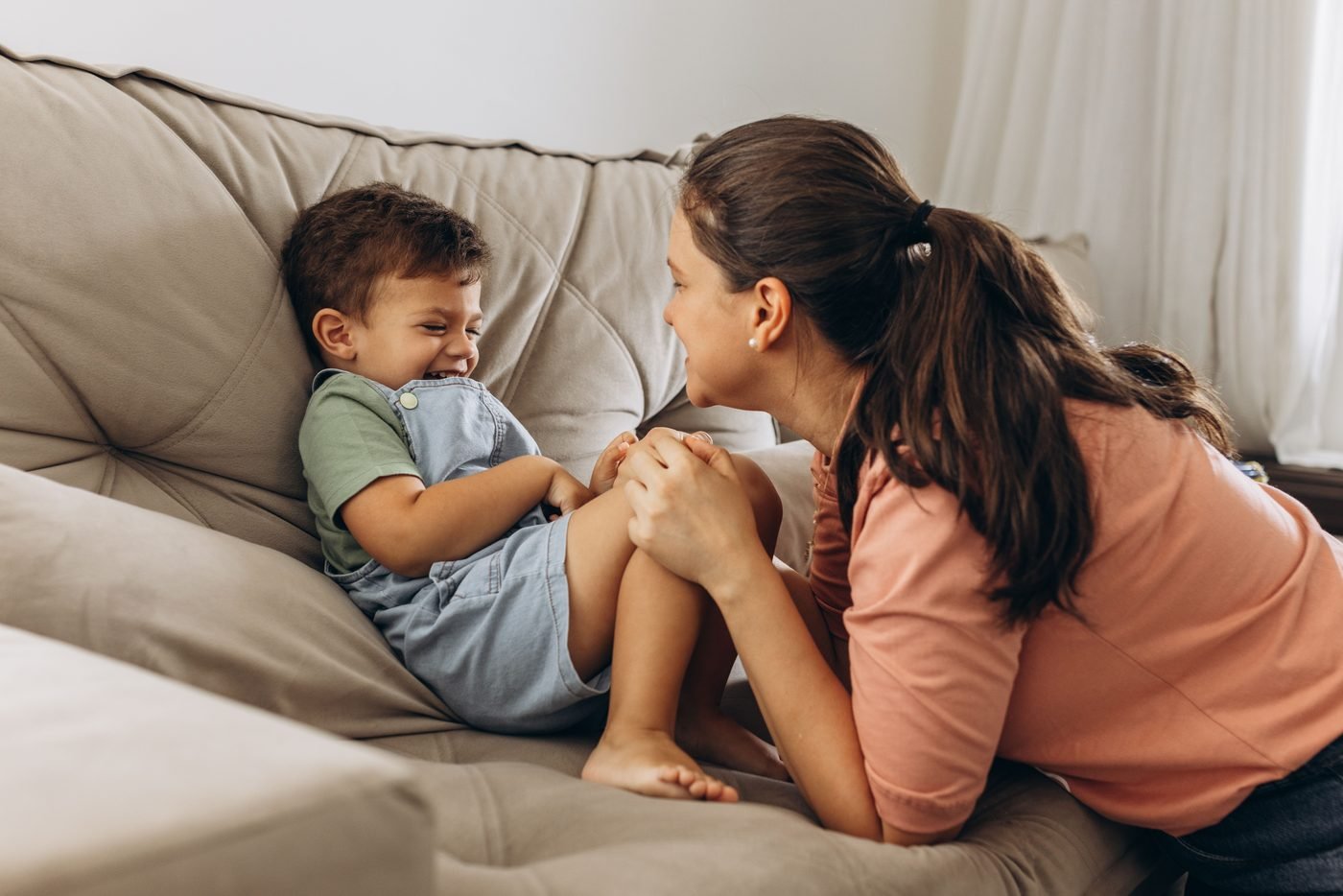
This is the guide’s best idea, and it comes from attachment theory: a child who feels securely connected to you is far more likely to cooperate than one who feels lectured. In practice it means pausing for ten seconds before correcting, getting down to your child’s eye level, and naming what you see. “You are upset because your tower fell” works better than “Stop crying, it is just blocks.” It does not mean permissiveness. It means the correction lands after the child feels heard, so it actually sticks.
Consistency Without Rigidity
Children feel safe when they can predict what happens next. That is why the guide keeps coming back to routines. But consistency does not mean rigidity, and this is where many parents trip up. A bedtime routine that survives a holiday, a sick week, or a late flight is worth more than a perfect routine that collapses the first time life intervenes. Aim for the same order of events (bath, book, bed) even when the timing slips. The order is the anchor, not the clock.
Progress Over Perfection and “Good Enough” Parenting
The most freeing idea in this whole space is “good enough” parenting: the house does not need to be spotless, dinner does not need to be homemade every night, and a day with extra screen time does not undo a month of good routines. But “good enough” has a boundary. Apply it to logistics, laundry, lunches, birthday-party crafts. Do not apply it to emotional availability or safety. A child can survive a freezer dinner. A child should not have to survive feeling ignored. Keep the standard high where it matters, and let it drop where it does not.
Age-by-Age: What Works at Each Stage
Newborns and Infants: Sleep, Feeding, and Red Flags
Newborn advice is where vague guidance is actually dangerous, so let us be specific. Safe sleep follows the ABCs recommended by the AAP: Alone, on their Back, in a Crib (or bassinet) with a firm mattress and nothing else in it, no blankets, pillows, or toys. Hunger signs come before crying: rooting, sucking on hands, and lip-smacking mean “feed me soon”; crying is a late sign. A simple bedtime routine, dim lights, a warm bath or wipe-down, a feed, a short song, bed, can start from the first weeks, and it pays off for months.
Fever is the one red flag every new parent should memorize. For a baby under three months old, a rectal temperature of 100.4°F (38°C) or higher means calling your clinician right away, even if the baby otherwise seems fine. The original guide mentions a “fever action plan” without the number. Write the number on your fridge. This article is general information, not medical advice. For any health worry, your pediatrician outranks any blog, including this one.
Toddlers: Tantrums, Routines, and Play-Based Learning
Toddlerhood is where the guide earns its keep. Toddlers cannot yet regulate big emotions, so your job is to be their calm while they learn. A visual routine chart, pictures of the morning steps in order, works before a child can read, and it cuts the daily negotiation in half. Day-blocks help too: instead of scheduling every hour, divide the day into loose blocks (morning play, midday outing, quiet time, evening wind-down) and let the details flex inside them.
For tantrums, the ACE method used by several FPMomTips pages is worth trying: Acknowledge the feeling (“You wanted the red cup”), Connect physically (a hug, or simply sitting nearby if touch is refused), Explain the limit briefly (“We use the blue cup today”). Keep the explanation to one short sentence. A toddler mid-tantrum cannot process a paragraph, and neither can an exhausted parent.
Three smaller habits help just as much: offer two choices to guide independence (‘red shirt or blue shirt’), name objects and actions during routine tasks so language grows with the day, and keep play sessions short, matched to a toddler’s attention span, with safe outdoor play whenever you can manage it.
School-Age Kids: Homework, Friendships, and Responsibility
Once school starts, the battlegrounds move to homework, chores, and friendships. A homework routine beats homework arguments: same time, same place, same order (snack, short break, homework, free play), with a visible timer so “five more minutes” has a definition. Age-banded chore charts work well here. Children around six to ten can handle real jobs like setting the table, feeding a pet, or sorting laundry, and the chart, not you, becomes the reminder.
Natural consequences are the discipline tool that fits this age best. Forgot your lunch? You will be hungry until snack time, and tomorrow you will remember the lunchbox yourself. The key is that the consequence must be safe, related, and delivered without a lecture. A consequence plus a lecture just feels like punishment with extra steps.
Two more tools belong here. Short role-play games rehearse social steps, turn-taking, listening, saying sorry, before the real moment arrives. And if learning or behaviour concerns appear, contact teachers early rather than waiting for a report card to confirm them.
Teenagers: The Missing Chapter
Here is an honest gap: almost none of the ranking pages say anything useful about teenagers beyond “keep communication open.” So here is what actually helps. Teenagers need the same connection-first approach, but delivered with more respect for privacy. Replace interrogation (“Who were you with? What did you do?”) with genuine curiosity (“How did that go?”). Talk about social media literacy directly: how algorithms push extreme content, how to spot a pile-on, what to do about a screenshot that spreads. And talk about mental health the way you talk about physical health, as something ordinary to check on, not a crisis topic to avoid. If your teen withdraws sharply, loses sleep for weeks, or talks about harming themselves, skip the parenting blogs and contact your pediatrician or a mental-health professional right away.
Morning Chaos to Calm Evenings: Routines That Survive Real Life
The Night-Before Prep and the Launch Pad System
The single highest-return habit in the entire FPMomTips world is night-before prep. Before bed, each child picks tomorrow’s clothes into a labeled basket or bin. Bags are packed, shoes are by the door, and breakfast is decided. In the morning, a “launch pad”, one spot near the door where everything lives, plus a two-minute door checklist (shoes, bag, water bottle, jacket) turns the morning scramble into a drill. Families who do this usually find mornings get shorter within a week, not because the children changed, but because the decisions were already made.
On-the-Go Kits and the Phone Home-Screen Safety Trick
For busy moms looking for time saving tips that actually survive contact with real life, the official FPMomHacks page adds three ideas this article missed. Pack compact on-the-go kits for errands and travel: wipes, a thin blanket, a protein bar, and a small toy, ready to grab. Use labeled pouches for receipts, tickets, and IDs so nothing gets lost in a bag. And put a family photo on your phone home screen, so staff can identify a wandering child fast if you are separated in a crowd. None of these need money or preparation the night before, which is why they earn their place here.
The 10-Minute Evening Tidy and Sunday Reset
Evenings fall apart when the house resets to zero every night. A ten-minute evening tidy, everyone, including children, tidies one zone for ten minutes before bath time, keeps the mess from compounding. On Sundays, a fifteen-minute reset does the heavier lifting: plan five dinners (theme nights help, pasta Monday, taco Tuesday, whatever your family actually eats), batch-cook one base like rice or shredded chicken, and set up a snack station at child height so children can serve themselves without asking you twelve times a day. None of this is glamorous. All of it buys you time and patience.
The Picky-Eater Plate Rule
If mealtimes are a negotiation, try the plate rule from the official FPMomHacks page: offer one new item with two known items on the plate, so the meal never feels like a test. Build meal plans around three core proteins, with one protein cooked twice a week, and the shopping list gets shorter while the arguments get rarer. It will not end picky eating overnight, but it ends the nightly standoff over an entirely unfamiliar plate.
The Minimum Viable Routine: For Days When Everything Falls Apart
Only one competitor page talks about this, and it is the most important idea in this article. Every routine needs a fallback version for sick days, travel days, and days when you are running on three hours of sleep. Write yours down now, while you are calm. A minimum viable morning might be: everyone dressed, teeth brushed, breakfast eaten, out the door. That is it. No reading log, no perfect lunchbox, no matching socks. A routine that survives bad days is a routine your family will still be using in six months. A routine that demands perfection will be abandoned by February. This is good enough parenting in practice: the fallback keeps safety and emotional availability intact while logistics drop to the minimum.
Behaviour Tools That Work in Under Five Minutes
When-Then Statements and Visual Timers
“When you finish your shoes, then we can play outside” works better than “If you don’t hurry, no park.” The first is a promise; the second is a threat, and children can hear the difference. Pair it with a one-minute visual timer, a sand timer or a phone timer they can watch, and abstract time becomes something a small child can actually see. Both tools take under a minute to use and they prevent a surprising number of power struggles.
The ACE Method for Meltdowns and the 3Cs for Sibling Fights
We covered ACE above for tantrums: acknowledge, connect, explain. For sibling fights, try the 3Cs: Calm (everyone takes a breath and separates for two minutes), Communicate (each child says what happened, uninterrupted), Collaborate (they propose one fix each, and you pick the fairest). It feels slow the first few times. By the fifth time, children start doing it without you, which is the whole point.
Positive Phrasing Swaps
Children hear the last word of a sentence loudest, so “Don’t run” becomes “running” in their ears. Swap the phrasing and the behaviour often follows:
- “Don’t run” → “Please walk inside.”
- “Stop shouting” → “Use your indoor voice, please.”
- “Don’t touch that” → “That is not for touching. Here is something you can hold.”
- “Be careful” → “Check your feet on those steps.”
It feels awkward for a week. Then it becomes automatic, and the house genuinely gets quieter.
Screen Time Rules by Age, Without Daily Battles
What AAP and WHO Actually Recommend
Here is another place where the ranking pages stay vague and you deserve numbers. The AAP’s guidance, in broad strokes: avoid screens for children under 18 months except video calls with family; from 18 to 24 months, only high-quality programming watched together with a parent; from ages two to five, about an hour a day of high-quality content, again watched together when possible. For school-age children there is no magic number. Instead, set consistent limits that protect sleep, physical play, homework, and family time. The WHO’s early-years guidance points the same way: less sitting in front of screens, more active play and sleep. Use these as anchors, not as laws to feel guilty about breaking on a long car journey.
The AAP 2026 Update: The 5 Cs and the Family Media Plan
For school-age children and teens, current AAP guidance has moved past a single time limit. It centers on the child, the content, the context, and what media crowds out, plus a written Family Media Plan made together as a family. This article already says there is no magic number for school-age children, and this update keeps that advice current: judge screen time by what it replaces (sleep, play, homework, family time) rather than by the clock alone, and write the plan down so everyone, parents included, can see it.
The Screen Token System and Family Media Agreement
Rules work better when children help write them. A family media agreement, one page, written together, stuck on the fridge, beats a hundred daily arguments. It should cover: which devices, when, for how long, and which zones are tech-free (dinner table and bedrooms are the two that matter most). For younger children, a screen token system works beautifully: each child gets a set number of tokens per day or week, each worth a fixed chunk of screen time, and they choose when to spend them. Choice removes the daily negotiation, because the tokens, not you, say no. For content, stick to genuinely educational apps where possible. Khan Academy Kids, Duolingo, and Headspace for Kids are the three names that come up most often, and they are decent starting points. And set a content curfew: no stimulating content in the hour before bed, for anyone, parents included.
The Mental Load Problem Nobody Talks About
Here is a concept the original guide barely mentions, and it might be the most important one for mothers reading this. Mental load is the invisible work of running a family: remembering the dentist appointment, noticing the shoes are too small, tracking who needs what for school tomorrow, planning meals around a picky eater and a nut allergy. It is different from task load (the doing). It is the remembering, planning, and worrying. Parenting writers often note research finding that mothers carry the larger share of this cognitive labour, and any mother reading this probably does not need a study to believe it.
Two things help. First, make the load visible: a shared family calendar (Google Calendar or Cozi both work) and a Sunday huddle where the week’s logistics are listed out loud, so the load stops living in one person’s head. Second, protect recovery time deliberately. The guide’s “two sacred hours” idea, two hours a day that belong to the parent, even broken into ten-minute windows, sounds impossible until you treat it as non-negotiable as a work meeting. Micro-rituals count: a five-minute breathing exercise (the 4-7-8 pattern, breathe in for four, hold for seven, out for eight, genuinely calms the nervous system), a short walk alone, a chapter of a book after bedtime. Parental well-being is not a luxury add-on to this guide. It is what makes the rest of it possible.

For Single Parents, Blended Families, and Dads Too
Most ranking pages wave at “all family types welcome” and then write exclusively for two-parent households with a stay-at-home mother. Let us be concrete instead.
If you are parenting alone, skip every co-parenting step without guilt and double down on systems that do not need a second adult: the launch pad, the Sunday reset, the snack station, and a small circle of people you can actually call. “Find your tribe” is not a slogan for single parents; it is logistics. One reliable friend who can do school pickup in an emergency is worth more than any routine chart.
In blended families, the same rules apply, but slower. New routines need buy-in from children who did not choose the change, so introduce one change at a time and let children name something in the routine themselves. For co-parents in separate homes, three shared rules are enough to start: the same bedtime window, the same screen agreement, and one shared calendar. Add a backup plan for when the plan breaks, split duties by work hours and energy rather than by default, and keep brief daily check-ins. Agreement on everything is a fantasy; agreement on three things is a plan.
And dads: one FAQ line saying “dads can benefit too” is not enough. Everything in this guide works the same regardless of which parent uses it. If you are a dad reading this, it was written for you as much as for anyone. The parent who does the routine owns the routine, and children bond with the parent who shows up consistently, full stop.
Sleep, Potty Training, and School Readiness: The Missing Basics
Three topics the ranking pages skip almost entirely, so here are the essentials.
Sleep. Beyond the newborn ABCs, the pattern that works at every age is a short, predictable wind-down: same order, dim light, no screens in the last hour. For toddlers who fight bedtime, a “sleep cue”, the same song, the same blanket, the same phrase every night, becomes a signal their body learns to obey. If nights are consistently brutal for weeks, that is a conversation for your pediatrician, not a blog.
Potty training. Readiness beats schedules. Signs include hiding to poop, telling you they are wet, staying dry for two-hour stretches, and interest in the toilet. When those appear, a low-pressure routine, sitting on the potty after meals, praise for trying rather than only for succeeding, works better than any three-day boot camp. And regressions after a new sibling, a move, or starting nursery are normal, not failure.
School readiness. It is not reading early. The skills that predict a smooth school start are self-care (dressing, toileting, opening a lunchbox), emotional vocabulary (naming feelings), turn-taking, and sitting for a short group activity. If your child can do those four things, the academics will follow. Practice them through play, not drills.
Special Needs and Neurodivergent Kids: A Starting Point, Honestly
Only one ranking page mentions neurodivergent children, and only in passing. We will not pretend this article replaces specialist advice. What helps as a starting point: visual supports (picture schedules, first-then boards), sensory-friendly routines (same order, warnings before transitions, a calm-down corner with headphones or a weighted lap pad if your child likes them), and breaking tasks into smaller steps than you think necessary. If your child has ADHD, autism, sensory processing differences, or developmental delays, the single best step is a proper evaluation and an occupational therapist or developmental pediatrician who can tailor strategies to your child. The frameworks in this guide adapt well, but they adapt with professional guidance, not instead of it.
When Routines Fail, and When to Ask for Help
Let us end the advice section with the part everyone skips: what to do when none of it works. First, check the basics. Is your child sleeping enough, eating regularly, getting outside daily? Is anyone in the house ill, overtired, or going through a big change? Most “behaviour problems” are unmet needs wearing a disguise.
Second, watch yourself. Parental burnout and depression are common and treatable, and they are not a character flaw. Signs worth acting on: feeling detached from your children for weeks, crying most days, losing sleep even when the baby sleeps, or feeling constantly angry in ways that scare you. For a child’s persistent difficulties, start with your pediatrician. For your own wellbeing, a therapist or counselor, not a parenting blog. Asking for help is not the opposite of good parenting. It is one of its clearest signs.
Your First-Week Starter Plan
Enough theory. Here is a seven-day plan that turns this guide into action, using only what we covered above. It assumes you are starting from scratch, so it starts small on purpose.
Day 1, Set up the launch pad. One basket per child for tomorrow’s clothes, bags by the door, shoes in one spot. Write the two-minute door checklist and stick it at eye level.
Day 2, Build the morning chart. Draw or print a picture chart of the morning steps in order. Let your child tick each step off. Do not add more steps than they can count on one hand.
Day 3, Start the wind-down. Pick a bedtime order (bath or wipe-down, book or song, bed) and use it tonight, at whatever time you manage. Order matters more than the clock.
Day 4, Hold a family meeting. Fifteen minutes, everyone present. Agree on three house rules together, and let each child propose one. Write them down. End with something fun, a snack, a game, anything that makes the next meeting welcome.
Day 5, Write the media agreement. One page, together: which devices, when, how long, tech-free zones. If your children are young, start the token system the same day.
Day 6, Do the weekly reset. Plan five dinners, batch-cook one base, set up the snack station, and run the ten-minute evening tidy. Do it on whichever day starts your family’s week, not necessarily a Sunday. Notice how much lighter the week feels with one hour of prep behind it.
Day 7, Protect your two hours. Take the two hours described in the mental load section above, two hours across the day that belong to you, even in ten-minute pieces. This is not a reward for finishing the plan. It is part of the plan.
Keep the morning checklist, the token chart, and the weekly planner on the fridge where everyone can see them. Tools you can see get used. Tools in a drawer do not.
Frequently Asked Questions
What is FPMomTips?
FPMomTips is the branded parental-guide series from the parenting website FamousParenting.com. It collects practical strategies, routines, gentle discipline, emotional development, screen-time rules, into one guide organized by principle and by age.
Is FPMomTips the same as FPMomHacks?
No. FPMomTips is the full guide; FPMomHacks is its quick-tips spin-off for busy families, morning prep, checklists, meal shortcuts, and time-saving systems. They complement each other but are not identical.
What makes FPMomTips different from traditional parenting advice?
Its emphasis on connection before correction, positive discipline instead of punishment, and practical systems over theory. Traditional advice often tells you what to stop; this guide spends more time on what to do instead.
How can parents start using FPMomTips in daily life?
Start with one system, not ten. Night-before prep and a morning chart are the two highest-return starting points. Add one new habit per week from the first-week plan above.
Is FPMomTips effective for children of all ages?
The principles stretch from newborns to teenagers, but the specific tactics change by stage. The original guide is strongest for toddlers and school-age children and thinnest for teenagers, which is why this article adds a dedicated teen section.
How does FPMomTips help reduce parenting stress?
By replacing daily negotiation with systems: routines, checklists, and agreements that make decisions in advance. Less deciding in the moment means fewer arguments and less decision fatigue.
Why is emotional intelligence important in parenting?
Children who can name their feelings can manage them. Naming emotions, modeling calm, and using tools like feeling wheels builds emotional vocabulary, which is the foundation of self-regulation later.
What if my child resists the routine or checklist?
Let them co-own it. A chart a child helped design gets used; a chart imposed on them gets ignored. If resistance persists, shrink the routine to its minimum viable version and rebuild from there.
How is “good enough” parenting different from neglect?
Good enough means letting go of perfection in logistics while keeping standards high for safety and emotional availability. Neglect is the absence of care. A freezer dinner is good enough. An ignored child is not.
Do these hacks work for single parents managing alone?
Yes, with adaptation. Skip co-parenting steps, lean on systems that need no second adult, and build one reliable support contact. The systems matter more, not less, when you are doing it alone.
How long before these systems become automatic?
Expect two to four weeks of conscious effort before a new routine feels automatic, and expect it to wobble during holidays, illness, and big changes. That wobble is normal, not a sign the system failed.
Is the guide suitable for parents of children with special needs?
The frameworks can adapt, but this is the guide’s weakest area. Use visual supports and sensory-friendly routines as a starting point, and get tailored strategies from a developmental pediatrician or occupational therapist.
How do I access the FPMomTips guide?
Through the free articles on famousparenting.com, search for the FPMomTips parental guide and the FPMomHacks companion there. Avoid lookalike domains and any page asking you to pay or call a number for the “full” version.
Can dads benefit from FPMomTips too?
Absolutely. Every strategy in this guide works regardless of which parent uses it. The parent who shows up consistently is the parent children bond with.
Is FamousParenting a real website, and is FPMomTips legitimate?
Yes, FamousParenting.com is a real parenting-advice site and FPMomTips is its genuine guide series. Just be careful with lookalike domains, and remember the official contact page lists no public phone number, so do not trust phone numbers on third-party pages.
Is there a FamousParenting app?
Not verifiably. The official guide page mentions an app for timed reminders and quick tips, but it gives no app name and no store link, and no official listing surfaced in search. Do not install anything from a third-party page claiming to be the FamousParenting app.
What printable tools does the official guide offer?
Four named tools: a newborn safety checklist, a toddler routine chart, a school-age assignments plan, and a one-page emergency contacts sheet you fill out yourself. Look for them on the official guide page and print them where everyone can see them.
What is the picky-eater plate rule?
Offer one new item with two known items on the plate, and build meals around three core proteins with one cooked twice a week. The meal stops feeling like a test, and the nightly standoff gets rarer.
Final Thoughts: What to Take From FPMomTips
The FPMomTips parental guide is not magic, and it is not a scam either. It is a sensible, if shallow, collection of ideas that work best when you treat them as a starting point rather than gospel. Take the routines, the connection-first discipline, and the time-saving systems. Add the specifics it skips: real safety numbers, age-based screen guidance, honest talk about mental load, and plans for single parents, blended families, dads, and neurodivergent kids. And whenever a page promises guaranteed results or asks for your money or a phone call, walk away. The real guide is free, and the best parenting advice never needs a hard sell.
If this guide helped you untangle the FPMomTips maze, Medium Blogs will keep going in the same spirit: practical, honest, and written for real family life. You can read more about us on our About Us page, or reach us through the Contact Us page. We would genuinely like to hear which of these systems worked in your house, and which ones did not.
More from Medium Blogs: if you like honest how-to guides, read our Uggcontroman controller guide, our explainer on Magvistanow Com, and our 500+ long good morning messages.

Aliza Blogger writes for Medium Blogs, where she covers business, lifestyle, tech, food, games, travel, celebrities and net worth in clear and simple words. Her work focuses on honest, well researched stories. Every figure is checked, every estimate is labeled, and every pairing is tested before it is written about. No hype, just clear facts and full detail.